

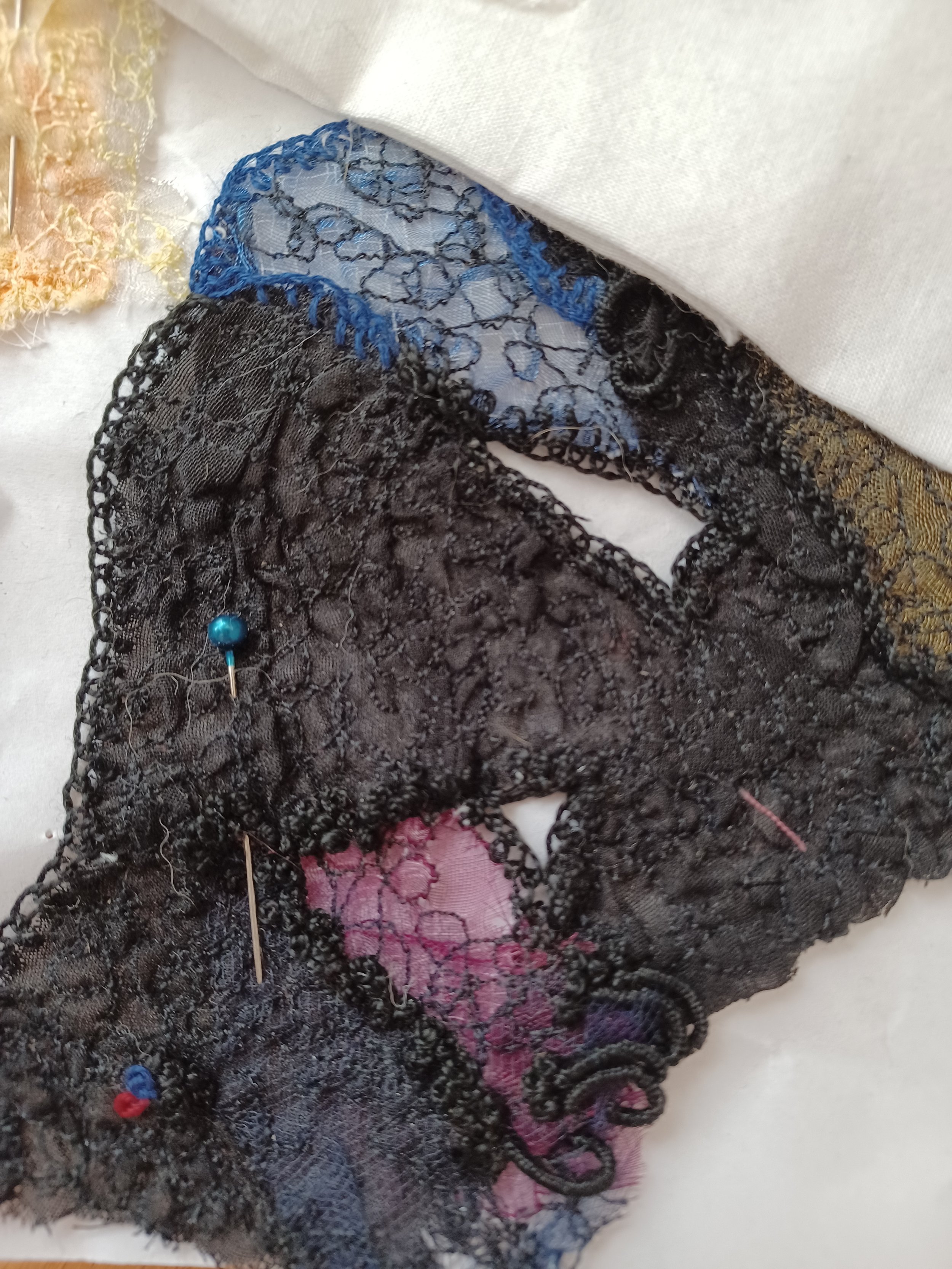
Happy Friday!
I was watching fiber artist Clara Nartey on Youtube the other day, and she asked a great question that I have often wondered myself about the Bayeux Tapestry. Why is it called a “Tapestery” when it is embroidery? I always thought the title had something to do with the size of the piece, I think, but I decided to look up the words embroidery and tapestry in the OED to see what I can find. Of course the tapestry itself is ancient, so maybe the name meant something different when the work was stitched. If you read my blog about the definition of a “quilt,” then you know I love a good definition and word hunt in the OED!
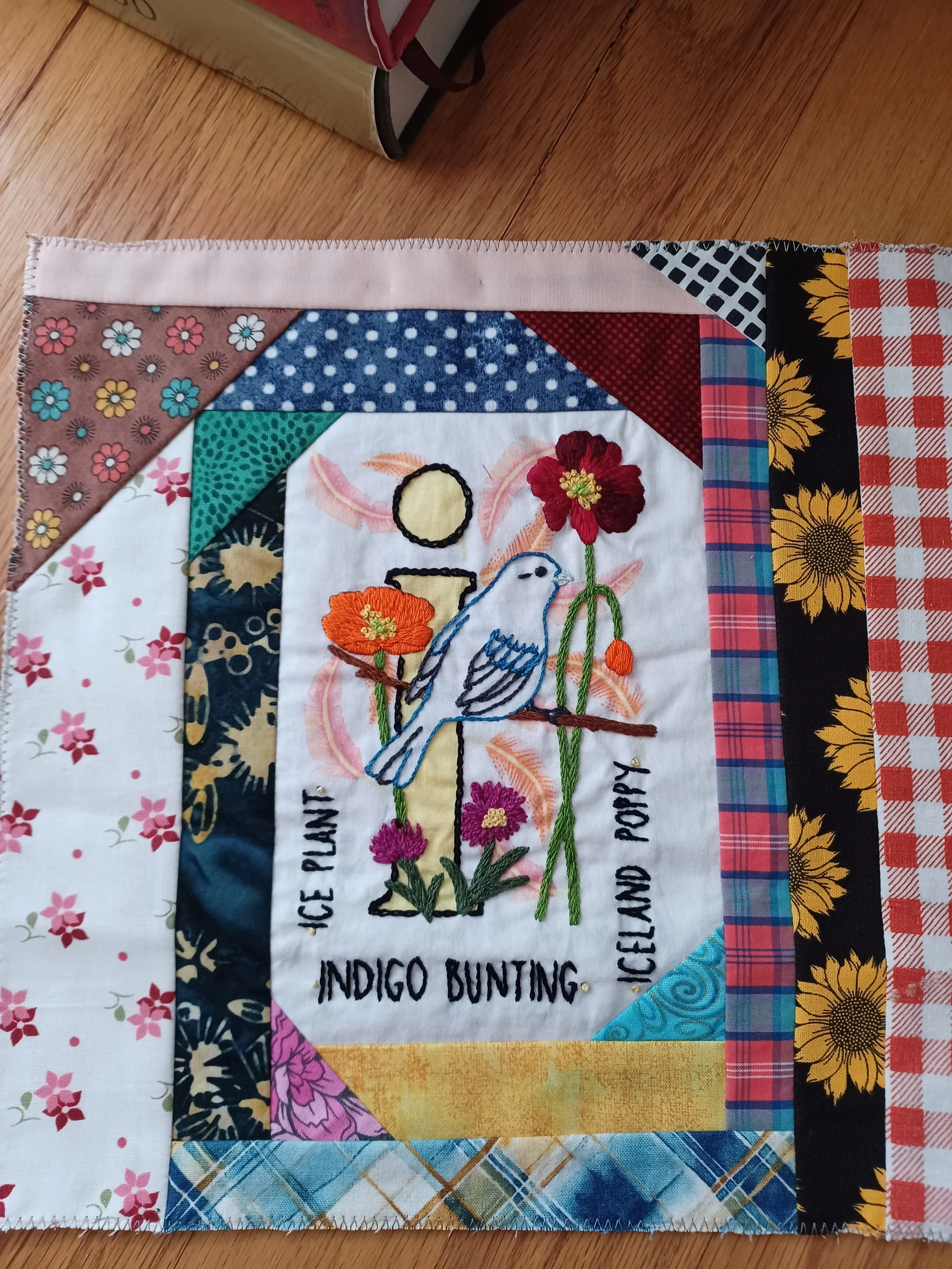
A crazy quilt block with the center embroidery worked on the surface of a stamped letter “I.”
The first definition for tapestry is, “A textile fabric decorated with designs of ornament or pictorial subjects, painted, embroidered, or woven in colors, used for wall hangings, ..” The definition goes on to say the fabric can be used for window treatments or festive balcony banners, and it discusses the nature of the woven fabric used for the banner itself. So I was right in my surmising that the name derives from the size and intended use of the textile. Also, the actual banner or what we call “background fabric” for the embroidery is probably woven in a specific way. I think the Bayeux Tapestry is worked on a fine linen making it a perfect tapestry and medium for embroidery. Embroidery is defined as “The art of ornamenting cloth and other fabrics with figures of needlework.”
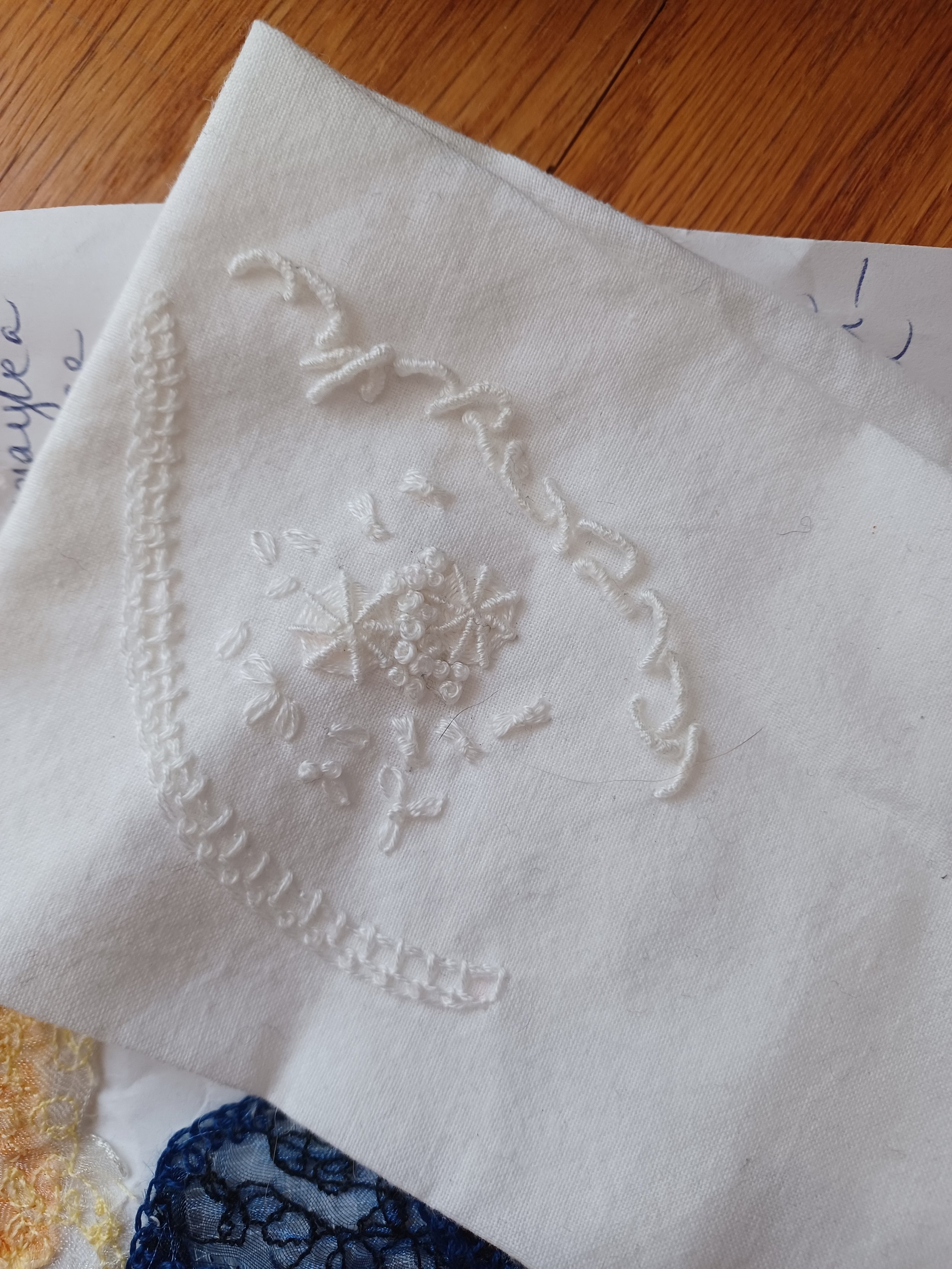
A sampling of white work in bullion knots, french knots, button hole stitch, lazy daisy stitches, web work, and wheat sheaf stitches.
I believe Clara was questioning the evident missing element of embroidery in the name of the tapestry, and she is right to question that omission. Embroidery has long been marginalized as “woman’s work,” and The Subversive Stitch is an excellent discussion of the history of embroidery and its place in the art world. Perhaps embroidery was left out of the name to elevate the work, sadly. However, those of us who embroider by hand and by machine know that the embroidery is equal to or far surpasses the tapestry of the work. The embroidery is superb and the working of those stitches took years and probably several embroiderers. By not mentioning embroidery, that work is not given its due, especially in a modern world where we think a tapestry is woven.
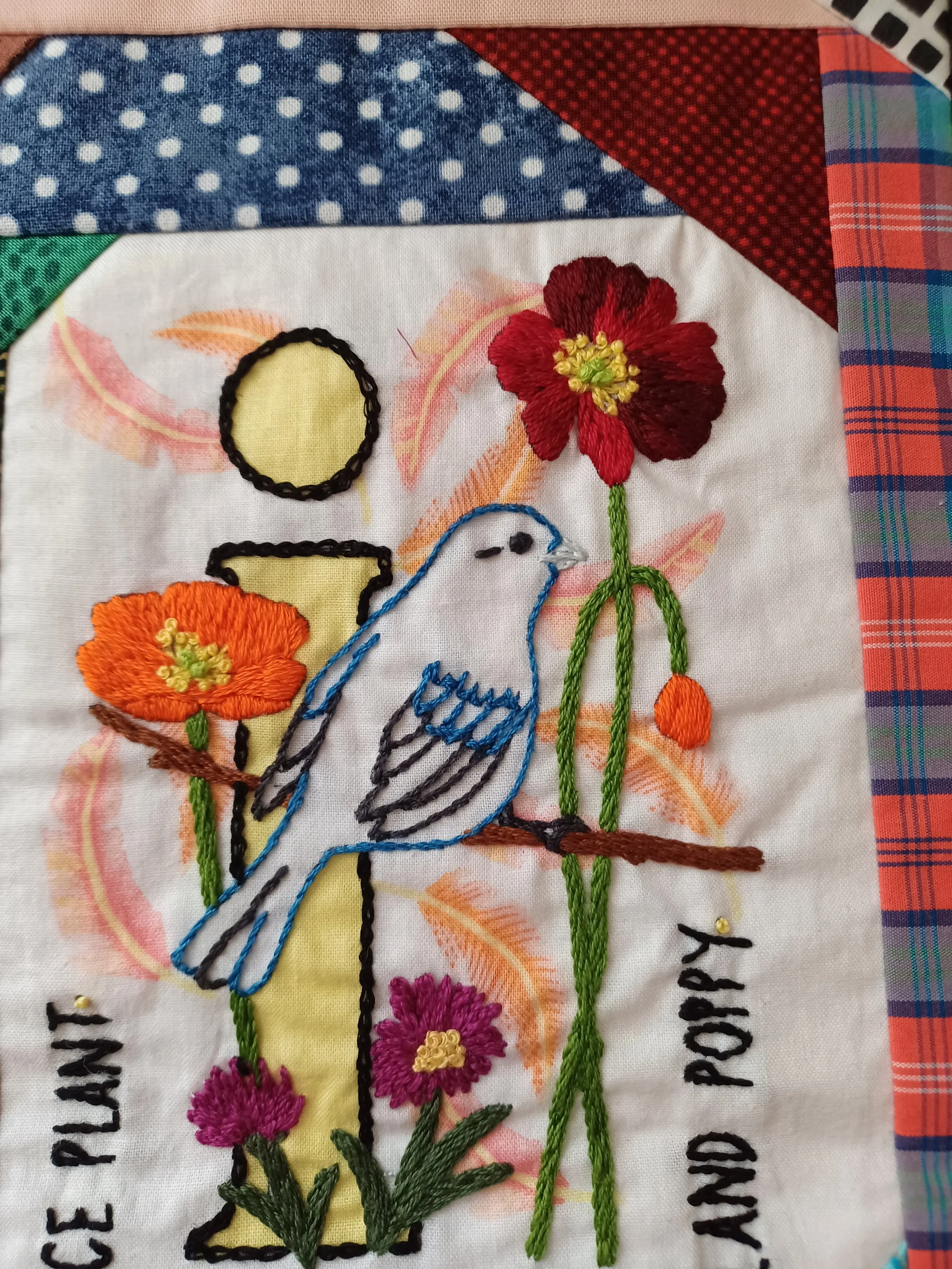
Close up of the bird and “I” block in the center of the crazy quilt block. Stem stitches, satin stitches, fill stitches, and french knots help highlight the stamped design.
Embroidery is such a wonderful art form and it is so expressive, and the skill and artistry should be elevation enough for any piece. I’m proud to say I am an embroiderer, and I think I will start calling the Bayeux Tapestry the Embroidered Bayeux Tapestry. The nuns who stitched and worked the piece are artists in the full sense of the word. They reimagined a real battle in wool thread! I’m pleased the piece is receiving so much attention, too!
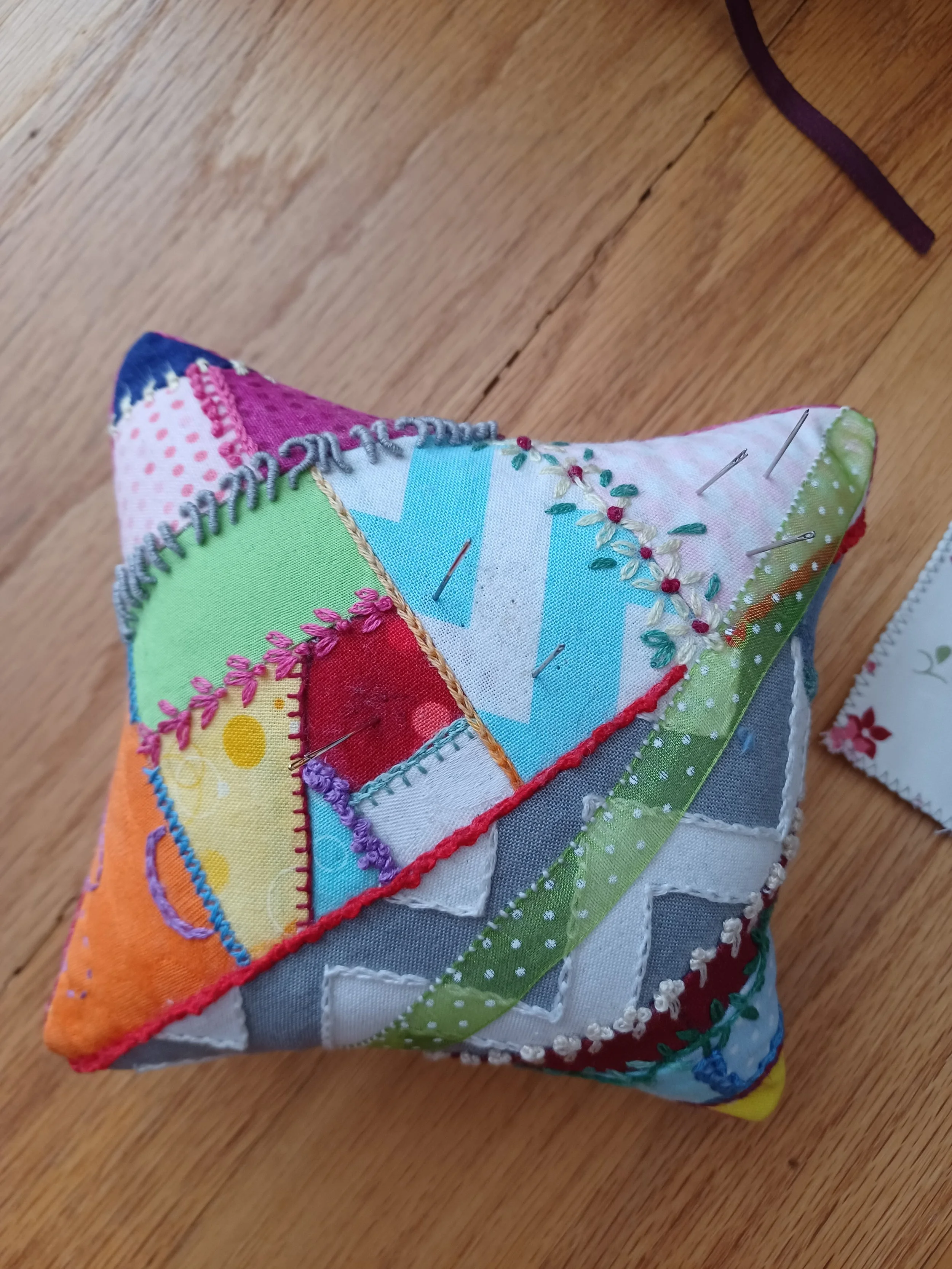
Hand embroidered pin cushion in crazy quilt pattern with each seam embellished with embroidery stitches.
Have a brilliant week,
Ginger
Reading Now: East of Eden…still beautiful. I am reading third Shady Hollow Mystery again to refresh myself and I am working on the middle of My Life in Middlemarch. Marianne Evans is fascinating! I am eyeing Margaret Atwood’s autobiography (of which I have a copy), on the heels of purchasing a beautiful used copy of The Robber Bride. I also found a book like My Life in Middlemarch except about Jane Austen novels called A Jane Austen Education: How Six Novels Taught Me About Love, Friendship, and the Things That Really Matter by William Deresiewicz. I have often argued that Austen is not Chick Lit, so I am intrigued, and it might give me an unneeded excuse to reread and read her novels….I love a full to be read pile!
Please listen to NPR for unbiased news and vote in the upcoming elections.
