

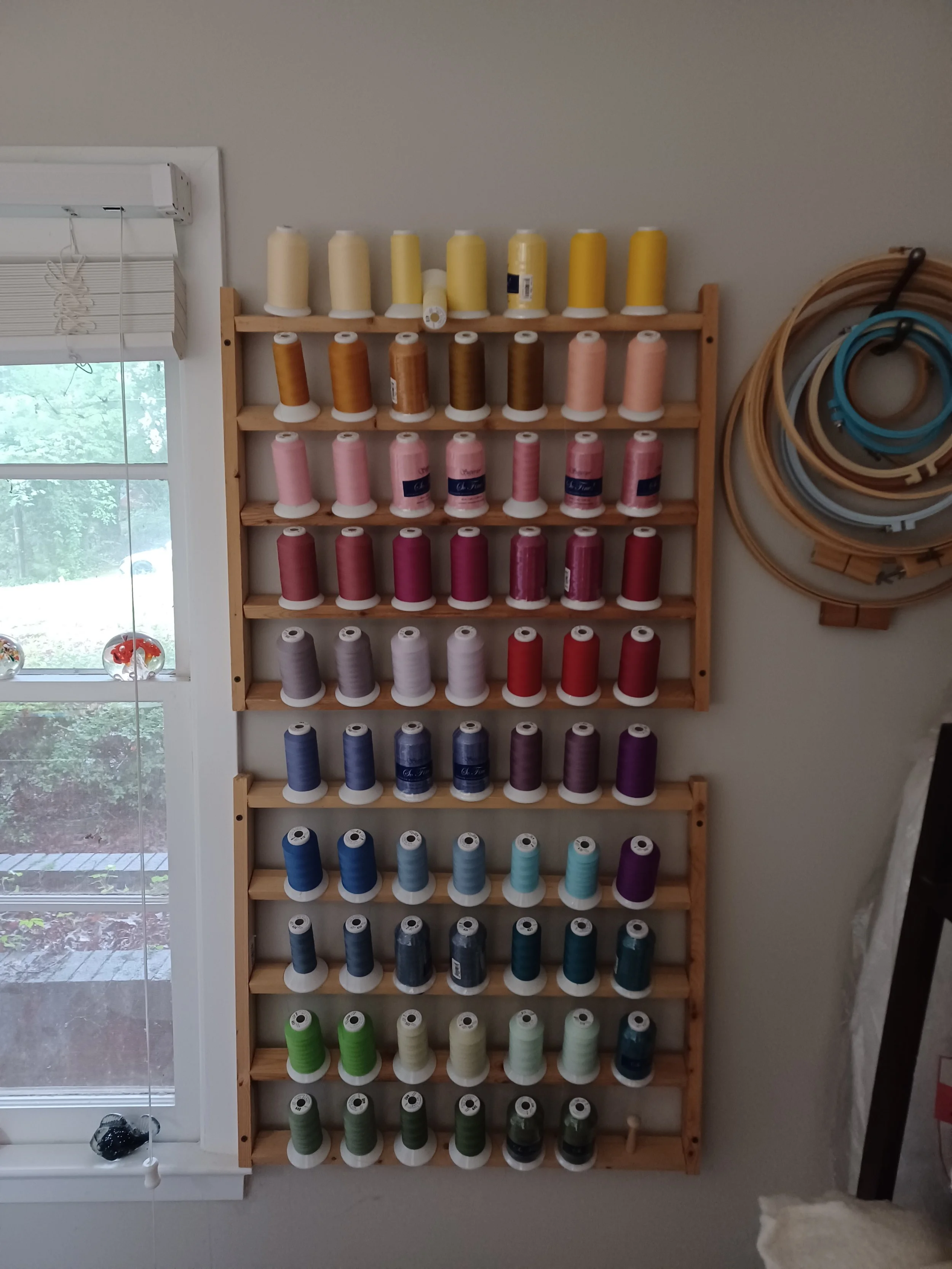
Good Rainy Morning!
We have been in extreme drought conditions here in North Carolina for the better part of this year, so the last few days have been very welcome. The steady, dark, rainy weather has been a balm, and I love rainy days anyway, so the studio has been especially cozy. Truth be told, I love all kinds of weather, and I enjoy what is happening any particular day, but my soul has been feeling a bit parched. These rainy days have gone a long way to sooth that need with the sounds of the rain, cooler weather, walking under an umbrella, damp scampering squirrels and brilliant wet bird plumage. I hope your weather has been comforting for you, too.
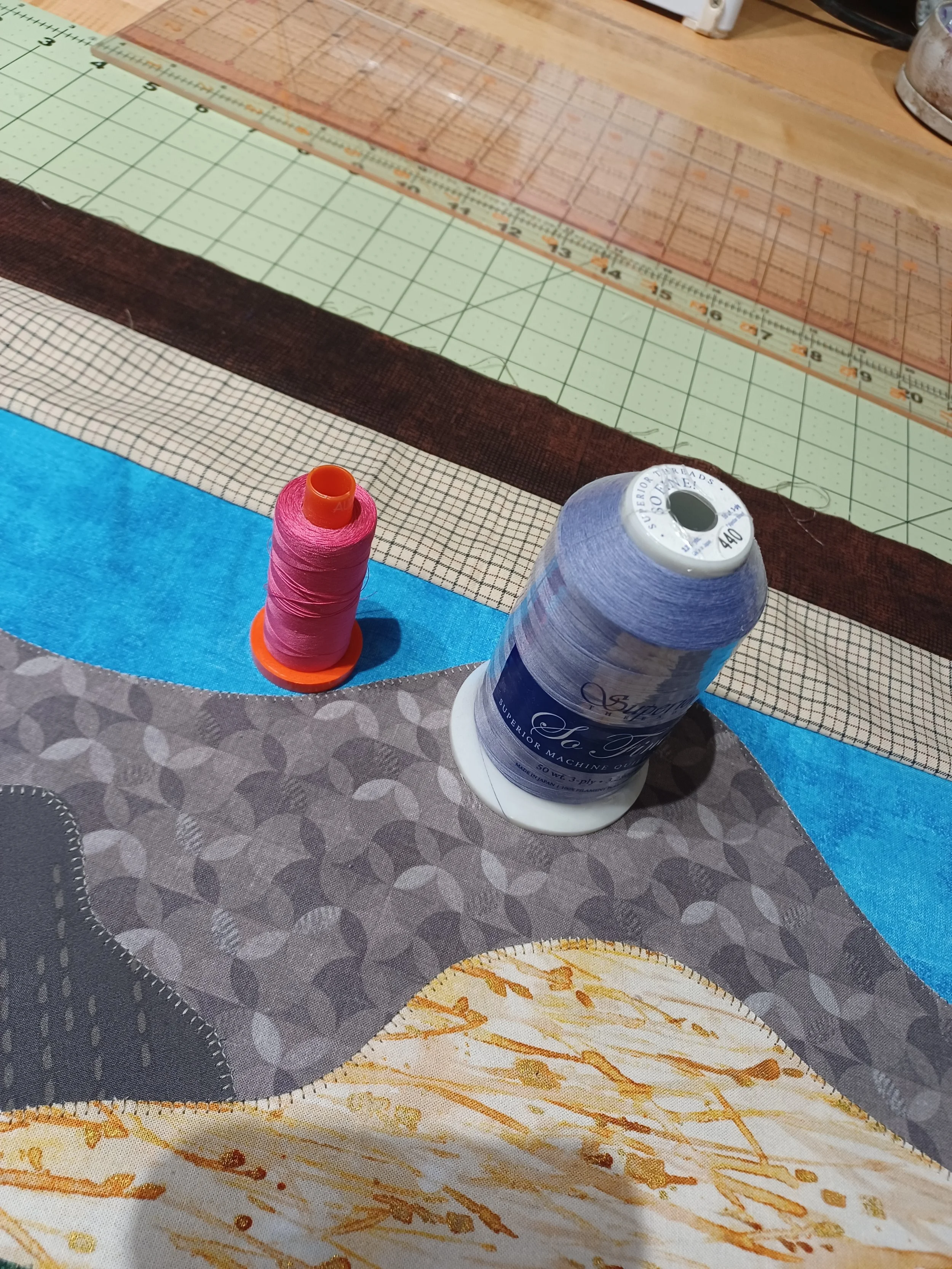
For the last few blogs, I have spent time discussing what makes a quilt—all of its layers, and this week I want to highlight what literally holds a quilt together: thread. I use thread in every part of making a quilt, but I basically use two types. I use Aurefil cotton thread for piecing, applique, and binding, or for all of the parts of making a quilt that are not the actual quilting, and I use SoFine polyester thread for the quilting. Of course, I use both of these threads because I trust their quality, they have a good range of colors, and my machines like them. Yes, the machines do have a say in thread!
And a good range of colors is very important, too. For basic piecing, I usually use a gray, light or dark, depending on the project colors. I match colors for applique and border piecing, including miters. For quilting, color is important because the thread is visible. Thread used for piecing is mostly hidden in the seams, but quilting thread sits on the fabric. Effect—aesthetics—becomes important. Is the quilting merely background or is it going to highlight? Thread choice matters, then. For T-shirt quilts and memory quilts the quilting, for me, should be background; the shirts and clothing are the stars. I often try to blend the color of the thread to make the quilting textural. Though, sometimes the quilting needs to highlight some aspect of the quilt and thread color can help create contrast and shading. Too, sometimes thread color depends on the quilt’s desire—will a soft rose thread create a lovely texture and provide a nice punch of color?
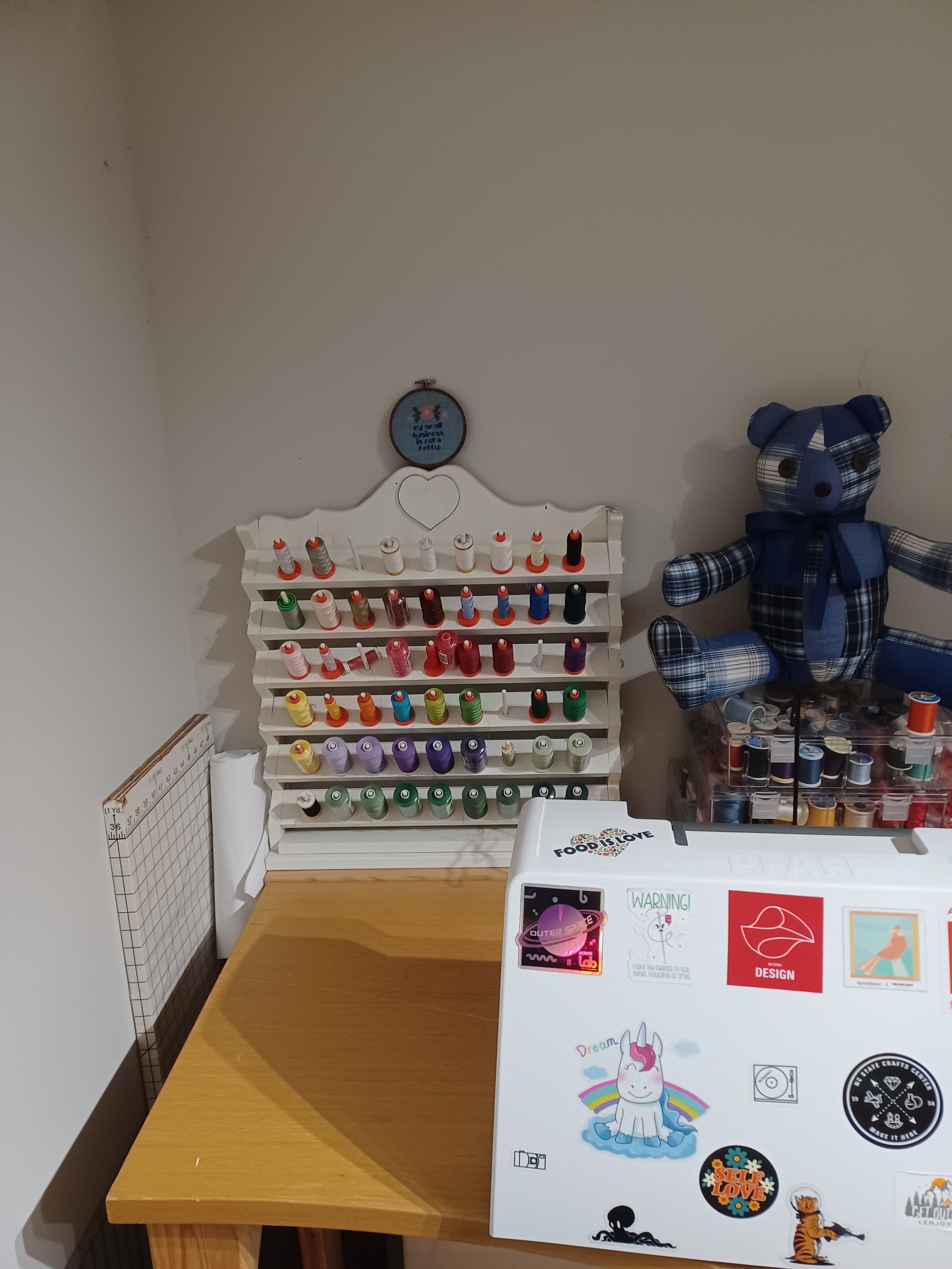
Thread choice is as fun to work out as fabric choice, and I love laying out threads against fabrics and quilt tops to decide what will work best. And thread is magic…I am often surprised by what color will blend best and how well colors work against fabrics. Often, I have contemplated thread colors for quilting as I am piecing the quilt top. My beautiful thread holders are wonderful inspiration and are pieces of art in the studio as well as making my thread easily accesible. Can you tell I love thread? I haven’t even talked about embroidery thread or yarns, either!
Sending Quilting Love,
Ginger
Currently Reading: Middlemarch by George Eliot, and it is as wonderful as the other times I have read it! I am also reading the third book in the Lockwood & Co. series by Jonathan Stroud…super fun, well-written, and well paced. I’m still contemplating my nonfiction options…I’ll keep you posted. These rainy days have been brilliant reading weather, too.
Be kind to everyone. NPR is a trusted news source with no political ties; fact based news in an ever biased landscape.
